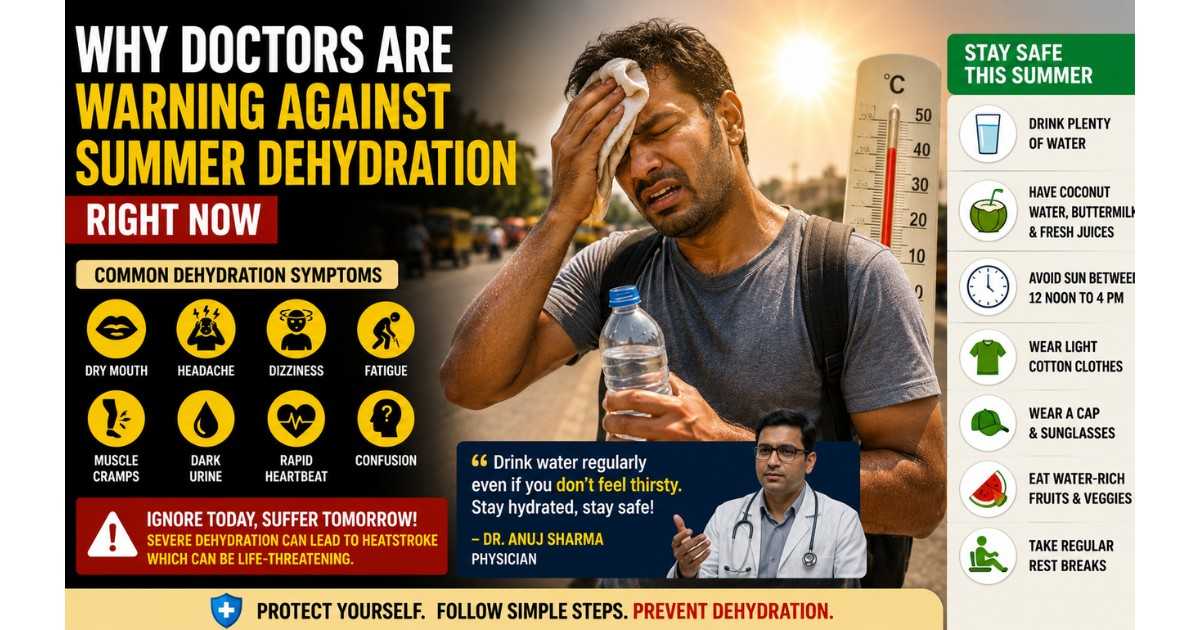
Doctors across India are raising concerns about dehydration symptoms as extreme summer temperatures and ongoing heatwave conditions continue affecting millions of people. Hospitals in several cities have reported an increase in patients suffering from dizziness, fatigue, headaches and heat exhaustion linked to severe dehydration. Health experts say rising temperatures combined with poor hydration habits are creating dangerous conditions, especially for children, elderly people and outdoor workers.
The topic has gained massive attention online as social media users share summer survival tips, heatwave videos and viral posts about dehydration symptoms. From office commuters to delivery workers and students, many people are struggling to cope with intense heat conditions across different parts of the country.
Doctors warn that dehydration symptoms can sometimes appear gradually and may become serious if ignored. While many people assume dehydration only causes thirst, medical experts say the condition can affect the entire body and even lead to life-threatening complications in extreme cases.
India is currently experiencing severe heatwave conditions in multiple states, pushing temperatures above dangerous levels. As the heat intensifies, the body loses water rapidly through sweating. If fluids and electrolytes are not replaced properly, dehydration symptoms may develop quickly.
Medical professionals explained that common dehydration symptoms include dry mouth, weakness, dizziness, headaches, muscle cramps and dark-colored urine. In more severe cases, individuals may experience confusion, rapid heartbeat, low blood pressure and fainting.
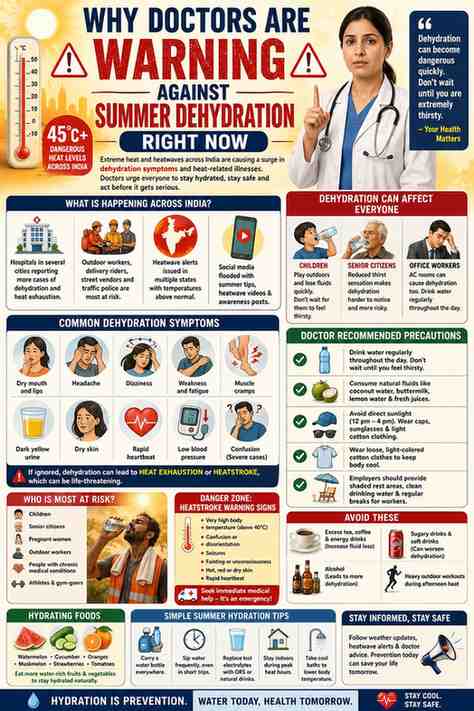
Several hospitals have reported rising cases of heat exhaustion and dehydration symptoms during the ongoing summer season. Doctors said many patients arrive after spending long hours outdoors without adequate hydration. Construction workers, delivery riders, street vendors and traffic police personnel are among the most vulnerable groups during extreme heat conditions.
The growing concern around dehydration symptoms has also sparked discussions regarding workplace safety during heatwaves. Health experts advised employers to provide shaded rest areas, clean drinking water and regular breaks for workers exposed to direct sunlight.
Children are especially vulnerable to dehydration symptoms because they may continue playing outdoors without realizing how much fluid their bodies are losing. Pediatricians advised parents to ensure children drink water regularly even if they do not complain of thirst.
Senior citizens also face higher risks during heatwaves. Doctors explained that older adults often experience reduced thirst sensation, making it easier for dehydration symptoms to go unnoticed until the condition becomes serious. Medical experts recommended frequent hydration and avoiding outdoor activities during peak afternoon hours.
Social media platforms have been flooded with health reels and awareness videos explaining hidden dehydration symptoms people often ignore. Viral content discussing signs such as constant fatigue, dry skin and sudden headaches has received significant engagement from users searching for summer health advice.
Experts stressed that dehydration symptoms are not limited to people working outdoors. Individuals spending long hours in air-conditioned rooms may also become dehydrated if they fail to consume enough fluids throughout the day.
Doctors advised citizens to avoid waiting until they feel extremely thirsty before drinking water. According to health professionals, thirst itself can already indicate the beginning of dehydration symptoms. Instead, people should consume water regularly throughout the day.
The ongoing heatwave has also increased demand for hydration drinks, coconut water, buttermilk and fresh fruit juices across Indian cities. Nutrition experts said natural fluids rich in electrolytes can help the body recover from excessive sweating and fluid loss.
Meanwhile, medical experts warned against excessive consumption of caffeinated beverages and sugary drinks during summer. Tea, coffee, soft drinks and energy drinks may worsen dehydration symptoms if consumed in large quantities because they can increase fluid loss.
Doctors also highlighted the importance of proper clothing during extreme heat. Wearing loose-fitting cotton clothes and light-colored fabrics can help reduce body heat and minimize dehydration risks.
Fitness enthusiasts and gym-goers have also been advised to remain cautious during intense summer conditions. Health experts recommended avoiding strenuous outdoor workouts during afternoon hours because excessive sweating can rapidly trigger dehydration symptoms.
Many social media users shared personal experiences related to heat exhaustion and dehydration symptoms after traveling or spending time outdoors during peak heat hours. Viral posts showing temperature displays crossing 45 degrees Celsius added to public concern regarding summer health risks.
The conversation around dehydration symptoms has become especially important as weather agencies continue issuing heatwave alerts for multiple states. Doctors emphasized that prevention is the best way to avoid serious health complications during extreme weather conditions.
Experts recommended carrying water bottles while traveling and consuming fluids even during short outdoor trips. Fruits with high water content such as watermelon, cucumber and oranges were also suggested as helpful summer foods.
Medical professionals warned that ignoring dehydration symptoms can eventually lead to heatstroke, a dangerous medical emergency requiring immediate treatment. Heatstroke symptoms may include extremely high body temperature, confusion, seizures and unconsciousness.
Hospitals and emergency health centers in several cities have increased preparedness due to the rise in heat-related illnesses. Ambulance teams and emergency departments are reportedly receiving more cases linked to dehydration symptoms and heat exhaustion.
Doctors advised people to stay indoors during the hottest part of the day, usually between noon and 4 pm. Those who must travel outdoors were encouraged to wear caps, sunglasses and protective clothing while carrying enough drinking water.
The rising awareness around dehydration symptoms has also increased interest in summer health content online. Health influencers, fitness creators and medical professionals are posting educational videos explaining hydration habits, warning signs and heatwave precautions.
Experts believe climate change and rising urban temperatures are contributing to increasingly severe summers in India. Environmental researchers warned that longer and more intense heatwaves may continue affecting public health in the coming years.
As temperatures continue rising across multiple states, doctors are urging citizens not to underestimate dehydration symptoms. Health professionals stressed that simple precautions such as regular hydration, avoiding direct sunlight and recognizing early warning signs can prevent serious medical emergencies.
For now, millions of Indians are closely following summer health advice as heatwave conditions persist. With dehydration symptoms becoming a major concern during the ongoing extreme weather, doctors continue encouraging people to prioritize hydration and remain cautious throughout the summer season.
Key Insights
- Rising cases of heat-related illnesses across India underscore how extreme summer temperatures are placing increasing pressure on public health systems, particularly in states experiencing prolonged heatwave conditions.
- Medical professionals linking dehydration symptoms to heatwave exposure highlight a preventable but potentially severe health risk that disproportionately affects outdoor workers, children and elderly populations.
- The increasing frequency of hospital admissions for heat exhaustion reflects the broader public health burden created by sustained high temperatures, especially in urban areas with limited cooling infrastructure and high population density.
- Experts emphasizing early warning signs such as dizziness, fatigue and dark urine point to the importance of public awareness in preventing progression from mild dehydration to life-threatening conditions like heatstroke.
- The focus on workplace hydration and safety measures highlights ongoing concerns about occupational health standards for informal and gig economy workers exposed to prolonged outdoor conditions.
- Rising demand for electrolyte-rich drinks and natural hydration alternatives indicates a shift in consumer behaviour during extreme weather periods, with greater reliance on functional beverages for health management.
- Doctors cautioning against caffeine and sugary drinks reflect broader nutritional guidance aimed at improving hydration efficiency during periods of excessive fluid loss.
- Public health messaging encouraging regular water intake rather than thirst-based drinking reinforces preventive healthcare strategies that are increasingly necessary in a warming climate.
- The growing role of digital platforms in spreading heat-health awareness shows how social media is becoming a key channel for public health communication, though it also raises concerns about misinformation and oversimplified medical advice.
- Climate change-linked temperature rise is increasingly being cited as a contributing factor to more frequent and intense heatwaves, reinforcing long-term concerns about environmental stress on healthcare infrastructure.
- Overall, the recurring rise in dehydration-related illnesses highlights the need for stronger heat action plans, improved urban cooling strategies and sustained public education campaigns to reduce avoidable health risks during extreme summer conditions.
Edited By: Akshaya Polepalli
Also Read: Zomato, Swiggy & Blinkit Wars Intensify With Faster Deliveries
Follow us on google news: Click Here